
MHEV, HEV, PHEV or EREV? A Guide to Hybrid Cars | Yitongda
Choosing the right hybrid vehicle is not just about fuel efficiency. Some buyers want lower running costs without relying on charging stations, while others prefer longer electric driving range or greater flexibility for long-distance travel.
Although MHEV, HEV, PHEV and EREV vehicles all combine electric power with another energy source, their powertrain designs and charging requirements are quite different.
1. Mild Hybrid (MHEV)
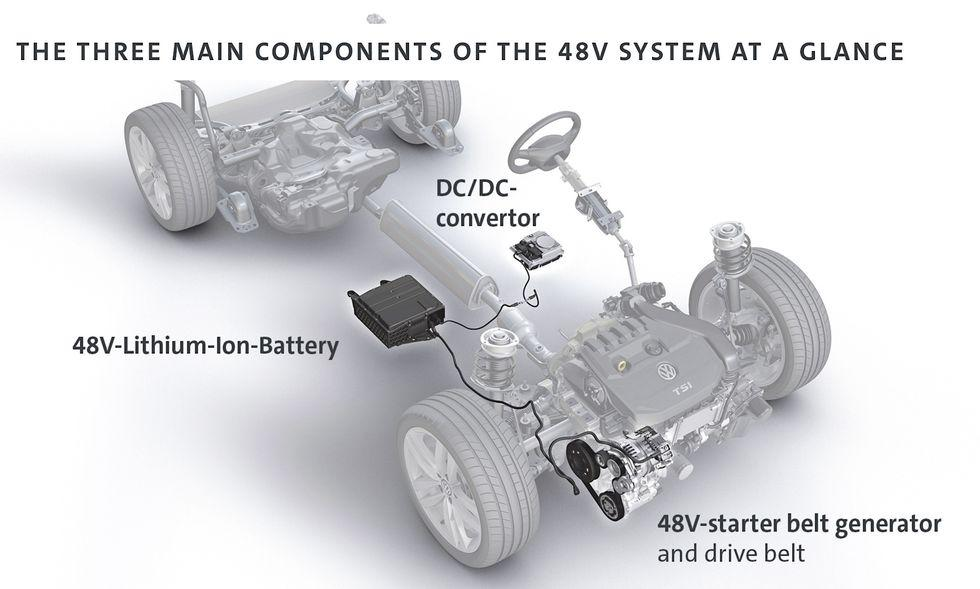
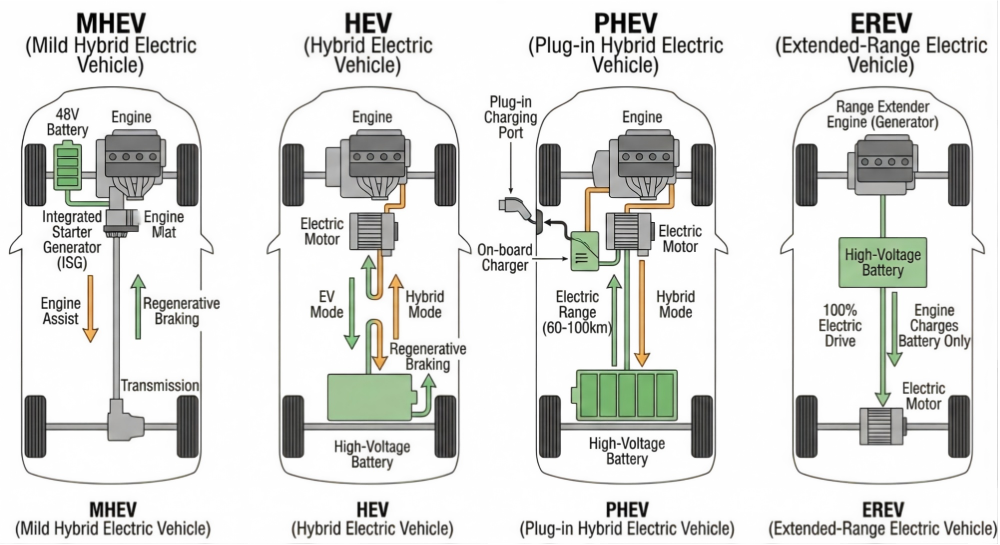
A Mild Hybrid Electric Vehicle (MHEV) combines a conventional petrol or diesel engine with a small electric motor and battery system. Many models use a 48V electrical architecture, although configurations vary between manufacturers.
Unlike a full hybrid, an MHEV's electric motor mainly assists the combustion engine rather than independently powering the vehicle.
How does MHEV work?
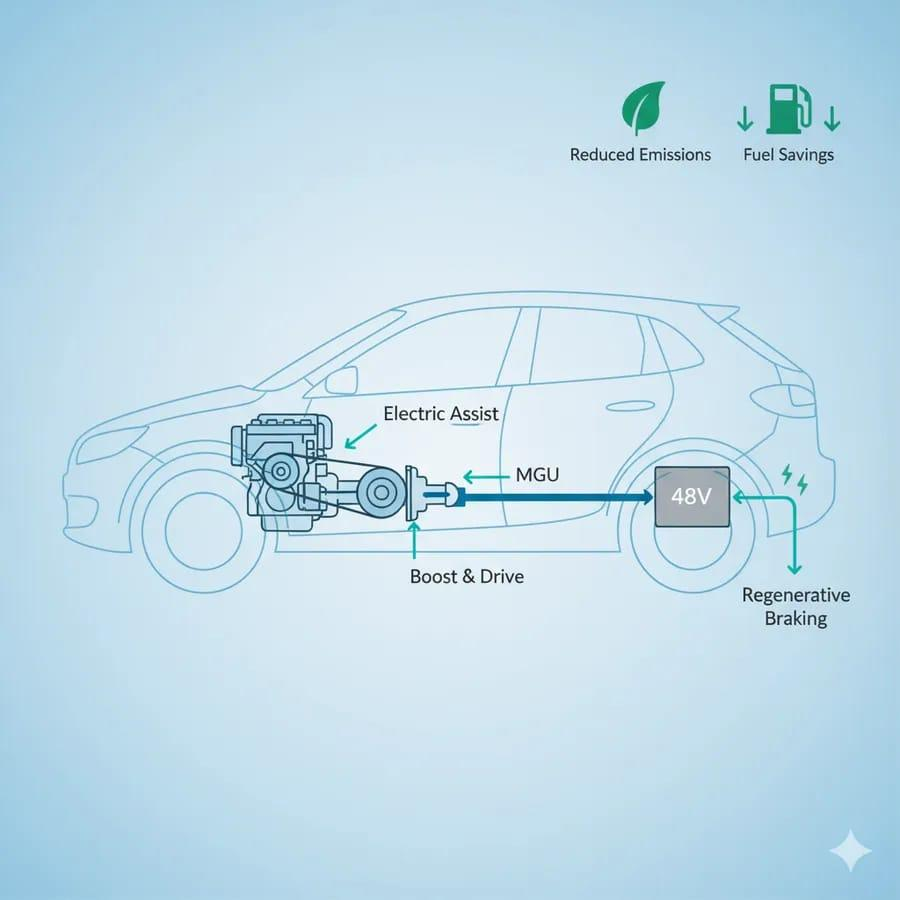
>>Starting and acceleration: The electric motor provides additional torque to assist the engine, helping improve acceleration and reduce engine workload.
>>Stop-start operation: The system can automatically switch off the engine when the vehicle stops and restart it when needed.
>>Regenerative braking: During deceleration, the motor works as a generator, recovering some kinetic energy and storing it in the battery.
>>Battery charging: The battery is recharged through energy recovery and the vehicle's electrical system, so external charging is generally unnecessary.
Key Advantages
• Improved fuel efficiency compared with some conventional petrol or diesel vehicles.
• No need for external charging infrastructure.
• Familiar driving and refuelling experience.
• Relatively simple transition from conventional engine technology.
Limitations
The electric motor provides assistance rather than serving as the main driving source. Most MHEVs cannot drive independently on electric power for meaningful distances.
Suitable For: Buyers who want some fuel-efficiency improvements without changing their usual refuelling habits or depending on charging stations.
2. Full Hybrid (HEV)
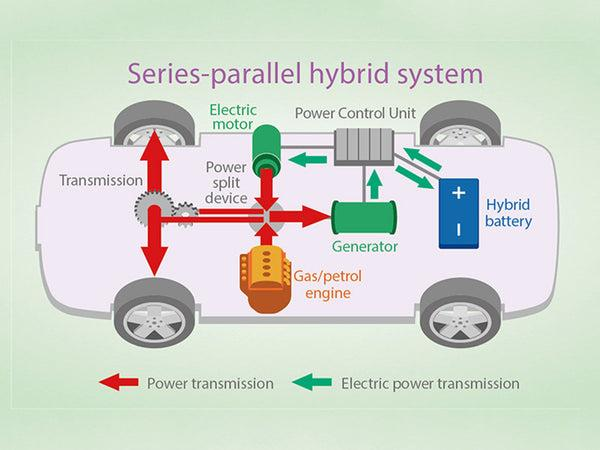
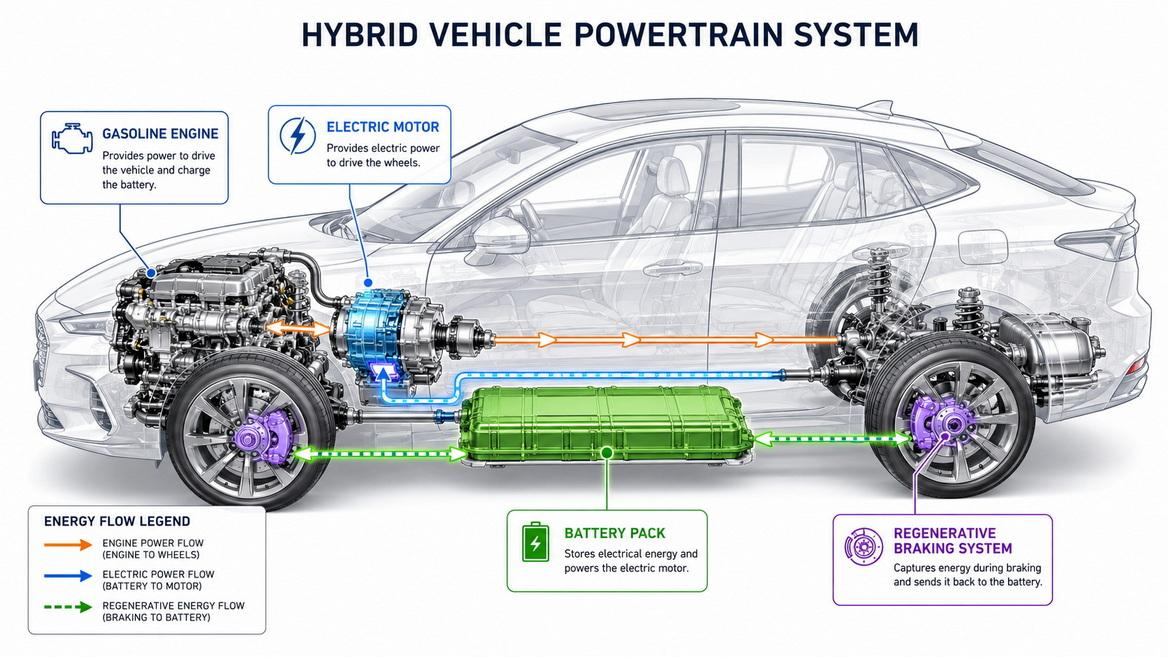
A Full Hybrid Electric Vehicle (HEV) combines a petrol engine, an electric motor and a hybrid battery. Unlike a mild hybrid, an HEV can use electric power alone to drive the vehicle under certain conditions.
The battery is normally charged through the engine and regenerative braking, meaning drivers do not need to plug the vehicle into an external charging point.
How does HEV work?
An HEV automatically adjusts how the engine and electric motor work together according to driving conditions.
>>Low-speed driving: The electric motor may power the vehicle independently when speed and power demand are suitable.
>>Normal driving: The petrol engine and electric motor can work together, or the engine can provide most of the driving power.
>>Acceleration: Both power sources may contribute to provide additional driving performance.
>>Deceleration and braking: The electric motor works as a generator, recovering energy and charging the hybrid battery.
The system manages energy automatically to improve efficiency under different driving conditions. Toyota's official explanation provides examples of how its hybrid system distributes power between the engine, motor and battery.
Key Advantages
• No external charging required.
• Efficient in many stop-and-go driving conditions.
• Electric motor assistance can reduce fuel consumption.
• Convenient for drivers who mainly rely on conventional fuel stations
Limitations
HEVs generally have smaller batteries than PHEVs and offer limited electric-only driving capability. They cannot normally provide the same extended electric driving range as plug-in hybrids.
Suitable For: Urban markets with frequent traffic congestion, where buyers want improved fuel efficiency but do not have convenient access to charging facilities.
3. Plug-in Hybrid (PHEV)
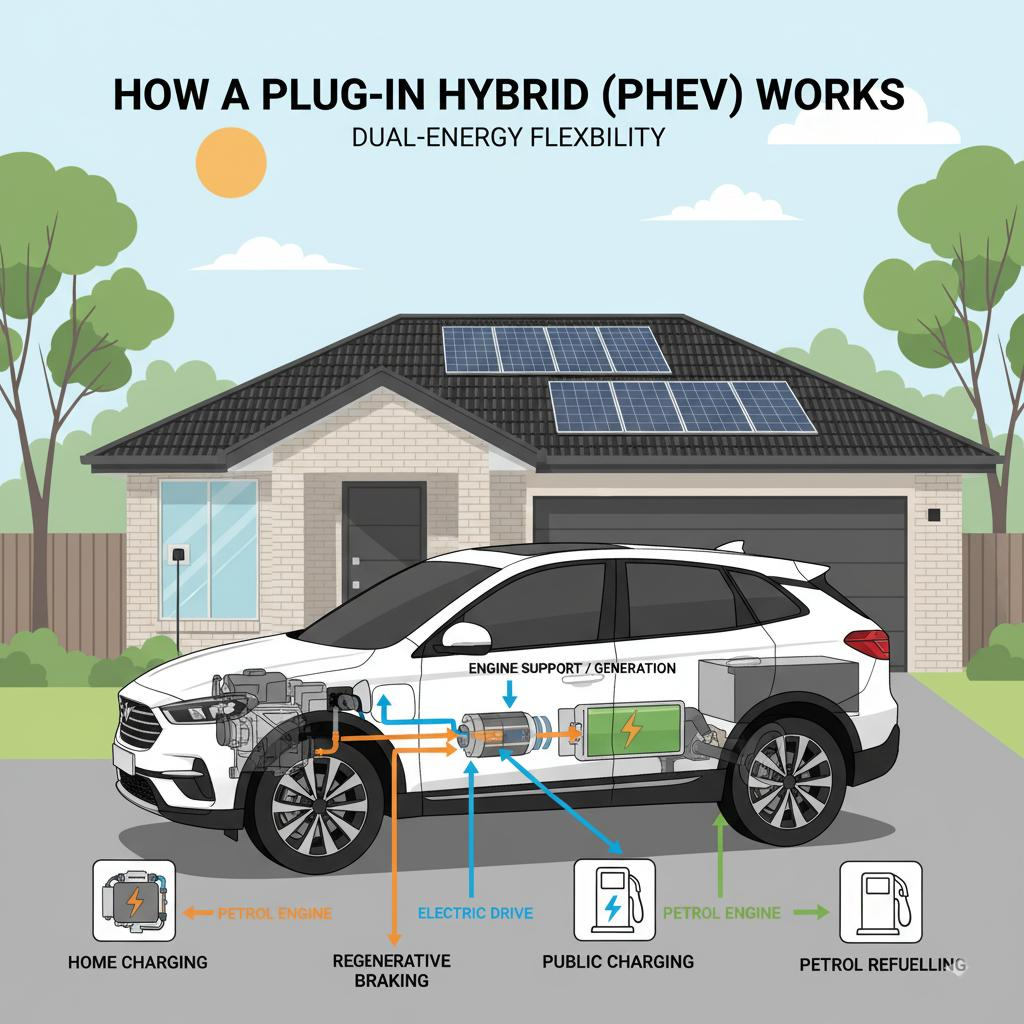
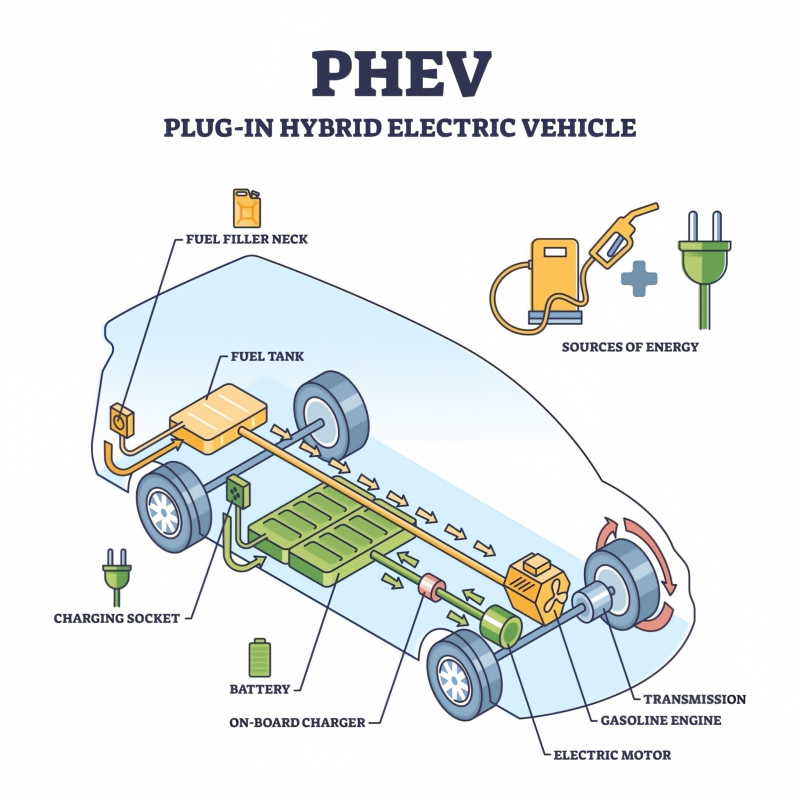
A Plug-in Hybrid Electric Vehicle (PHEV) combines a petrol engine, an electric motor and a larger battery than a conventional HEV. It supports external charging, allowing drivers to recharge the battery through home, workplace or public charging facilities.
Unlike conventional HEVs, PHEVs can generally travel a longer distance using electric power alone before switching to hybrid operation.
How does PHEV work?
>>Electric driving: When the battery has sufficient charge, the vehicle can use electric power for daily journeys.
>>Hybrid driving: When additional power is required or the battery charge becomes low, the petrol engine can work together with the electric motor.
>>Battery charging: The battery can be charged through an external power source and regenerative braking. Some systems can also use the engine to generate electricity.
For example, BYD's DM-i technology is designed around an electric-first plug-in hybrid approach, combining a Blade Battery, electric motor and petrol engine.
Key Advantages
• Longer electric driving range than most conventional HEVs.
• Can reduce petrol consumption when regularly charged.
• Petrol engine provides additional flexibility for long-distance journeys.
• Suitable for drivers who want both electric commuting and conventional refuelling options.
Limitations
PHEVs generally have higher purchase costs than comparable conventional vehicles due to their larger batteries and more complex powertrains. Their actual fuel economy also depends heavily on charging frequency and driving habits.
A PHEV that is rarely charged may not deliver the fuel savings buyers expect.
Suitable For: Markets where home or workplace charging is accessible, and buyers want electric driving for daily journeys without giving up petrol-powered long-distance flexibility.
4. Extended-Range Electric Vehicle (EREV)
An Extended-Range Electric Vehicle (EREV) is designed primarily around electric propulsion. Its electric motor drives the wheels, while a petrol engine mainly works as a generator to produce electricity when the battery needs additional energy.
Unlike conventional HEVs and many PHEVs, the petrol engine in a typical EREV does not directly drive the wheels through a mechanical connection.
How does EREV work?
>>Electric driving: The battery supplies electricity to the motor, which drives the wheels.
>>Range extension: When the battery charge becomes low, the petrol engine starts and drives a generator to produce electricity.
>>Energy storage: Electricity generated by the range extender can supply the motor and help maintain battery charge.
>>External charging: Most modern EREVs also support external charging, providing additional flexibility.
This powertrain design gives drivers an electric driving experience while retaining petrol-based energy replenishment for longer journeys.
Li Auto's official annual report describes its EREV system as an electric propulsion system combined with a range extender, with energy replenishment available through charging and refuelling.
Key Advantages
• Electric motor provides the primary driving power.
• Smooth acceleration and an electric driving experience.
• Petrol engine can generate electricity to extend driving range.
• Reduces dependence on public charging stations for long-distance travel.
Limitations
EREVs still consume petrol when the range extender operates. They also have more complex powertrain systems than conventional pure electric vehicles, and their overall efficiency depends on driving conditions and energy management.
Suitable For: Buyers who prefer electric driving but are concerned about charging availability or regularly travel long distances.
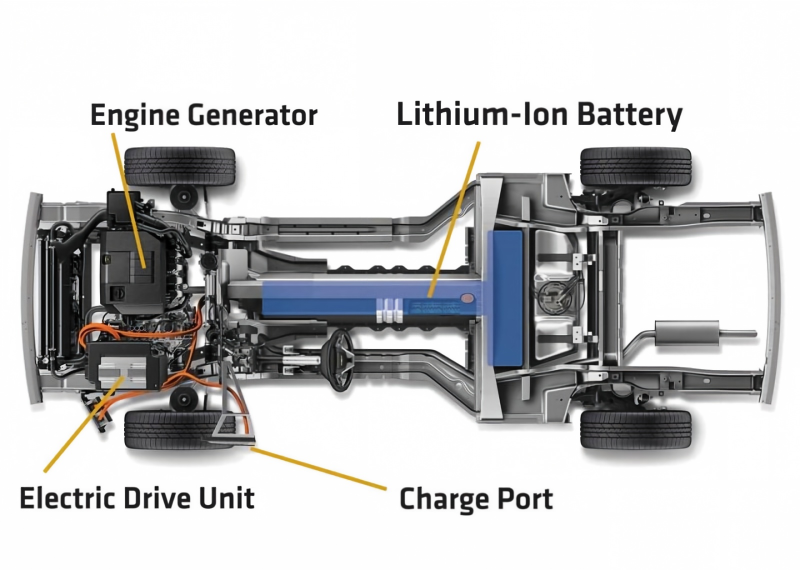
5. Popular Chinese Hybrid Technologies
Chinese automakers have developed their own hybrid technologies to improve energy efficiency, driving performance and vehicle adaptability.
These technology names are manufacturer-specific systems or platforms, rather than separate industry-wide hybrid categories.
| Brand | Technology | Main Characteristics |
| Efficiency-focused plug-in hybrid technology | ||
| BYD | DM-P | Performance-oriented plug-in hybrid technology |
| BYD | DMO | Off-road-oriented super hybrid platform |
EM-i / EM-P | Geely's own hybrid technology families, with configurations varying by model | |
DHT | Dedicated hybrid transmission and powertrain technology | |
GWM | Hi4 | Intelligent hybrid four-wheel-drive architecture |
What makes these technologies different?
BYD DM-i: Focuses on fuel efficiency and electric-first driving. Its system combines an electric motor, battery and petrol engine.
BYD DM-p: Places greater emphasis on performance-oriented plug-in hybrid applications.
BYD DMO: Developed for off-road-oriented applications, combining hybrid technology with an off-road vehicle platform.
Geely EM-i / EM-P: Geely's hybrid technology families cover different priorities, including energy efficiency and performance.
GWM DHT / Hi4: GWM's DHT is a dedicated hybrid powertrain technology, while Hi4 focuses on intelligent hybrid four-wheel-drive architecture.
For international buyers, it is important to look beyond the technology name. Battery capacity, electric driving range, engine configuration, drive system and vehicle specifications should all be checked against the actual model.
6. Which Hybrid Type Is Right for Your Market?
There is no single hybrid system that suits every country. The right choice depends on local charging infrastructure, energy prices, driving habits and customer expectations.
The following table provides a general comparison to help dealers and importers evaluate different options.
| Comparison | MHEV | HEV | PHEV | EREV |
| External charging | Not required | Not required | Supported | Generally supported |
| Electric motor's role | Mainly assists engine | Drives in some conditions and assists engine | Provides electric driving and hybrid assistance | Usually provides primary wheel drive |
| Electric-only driving | Generally unavailable | Limited | Longer electric driving range | Designed for electric driving |
Charging infrastructure dependence | Low | Low | Higher for full benefits | Lower than a pure EV for energy replenishment |
Battery size | Small | Small to medium | Larger | Generally larger than HEV |
System complexity | Relatively low | Medium | Higher | Higher |
Main consideration | Basic efficiency improvement | Fuel economy without plugging in | Regular charging access | Electric driving with fuel-based range extension |
Note: These are general characteristics, not universal specifications. Actual battery size, electric driving range, powertrain configuration and cost vary by manufacturer and vehicle model.
Which Hybrid Type Is Right for Your Market?
1. Charging infrastructure
If customers have limited access to charging stations, MHEVs and HEVs may be easier to use. PHEVs and EREVs can offer more electric driving benefits when charging is available.
2. Fuel and electricity prices
Local energy prices influence running costs. Buyers should compare real-world fuel and electricity consumption rather than relying only on official test figures.
3. Driving habits
Daily commuting distance, traffic congestion and long-distance travel requirements all affect which hybrid system makes the most sense.
4. Purchase costs and import regulations
Battery size, vehicle specifications, taxes, customs duties and local import requirements can influence the final purchase cost.
5. After-sales support
Battery maintenance, high-voltage system repairs, spare parts availability and technical support should be considered before introducing a new hybrid model to the local market.
Conclusion
MHEV, HEV, PHEV and EREV technologies offer different approaches to combining fuel and electric power. Their differences lie not only in fuel efficiency but also in electric driving capability, charging requirements and powertrain design.
For car dealers and importers, understanding these differences is essential when selecting vehicles for different customer needs and market conditions.
Yitongda provides a range of Chinese vehicles for international buyers, including petrol, hybrid and electric models. Contact us to explore available vehicles and discuss your sourcing requirements.